
Articles
Cureus Journal of Medical Science | DOI: 10.7759/cureus.50533 | Published December 14, 2023 (Link)
Two Surgeries Failed Her. Chiropractic Succeeded: A Decade of Post-Surgical Pain Finally Healed
After two failed spinal fusion surgeries and 18 years of suffering, a 50-year-old woman finds relief through CBP® structural rehabilitation — without more surgery.
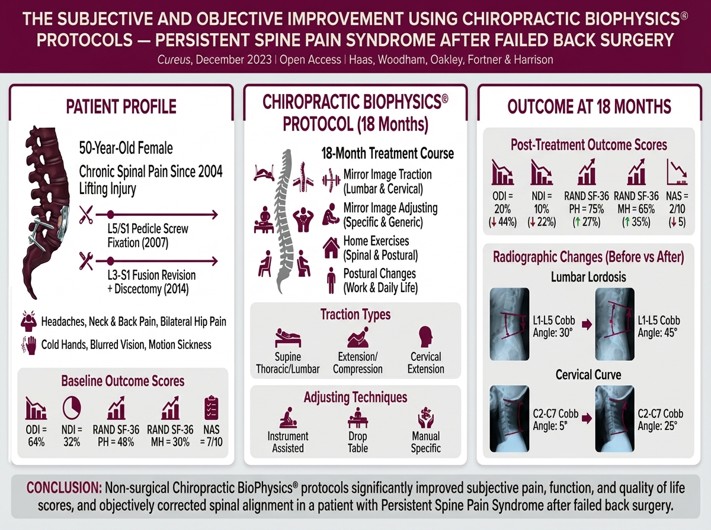
In 2004, a simple act of lifting a microwave oven changed a woman’s life forever. What began as severe lower back pain spiraled into an 18-year odyssey of suffering, disability, and failed medical interventions. By 2007, the pain had become so unmanageable that she underwent her first spinal surgery: a pedicle screw fixation at the L5/S1 level.
For ten years following that surgery, she worked as a heavy equipment operator at a coal mine, battling frequent exacerbations of pain. By 2014, the situation had deteriorated enough to warrant a second, more invasive surgery. Surgeons revised the original fusion and expanded it, fusing her spine from L3 to S1. Yet, despite having hardware permanently bolted into her spine, the pain persisted. She suffered from severe muscle spasms, sleepless nights, and a quality of life that was slowly being destroyed. Over-the-counter medications barely touched the pain, and traditional chiropractic adjustments offered only fleeting relief.
By 2022, she was facing the prospect of a third surgery—a terrifying option given that revision surgeries have failure rates as high as 45%. Instead of going under the knife again, she visited a specialized clinic in Gillette, Wyoming. What happened next challenges the conventional wisdom that surgery is the final answer for chronic back pain.
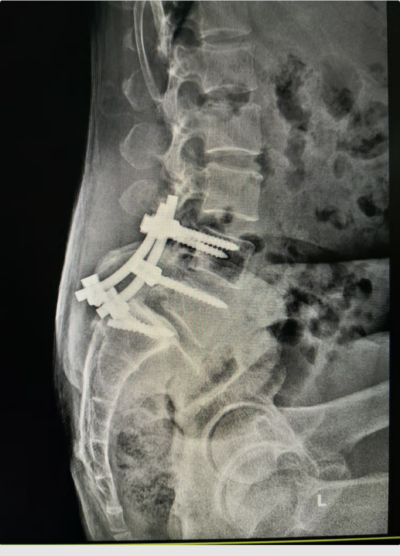
Figure 1. Failed back surgery syndrome and spinal hardware complications | Image: Caring Medical
Understanding Failed Back Surgery Syndrome (FBSS)
Failed Back Surgery Syndrome (FBSS), increasingly referred to as Persistent Spine Pain Syndrome (PSPS), is a devastating reality for many patients. It occurs when spinal surgery fails to improve symptoms, or when pain returns and worsens after the procedure. Statistics paint a grim picture: failure rates for a single spinal surgery range from 34% to 64%. For revision surgeries, the failure rate is estimated between 9% and 45%.
With each successive surgery, the likelihood of success diminishes while the risks of infection, hardware failure, and permanent nerve damage increase. This patient had already endured two surgeries that failed to give her a pain-free life. The medical system offered a third, but she chose a different path.
Why Do Spinal Surgeries Fail?
The fundamental issue with many spinal surgeries is that they focus on fusing specific, painful segments without correcting the global alignment of the spine. Surgery acts like a localized patch; it stabilizes one area but often leaves the overall structure of the spine unbalanced.
If the spine’s natural curves (sagittal and coronal balance) are not restored, gravity continues to exert abnormal leverage on the spine. This causes “adjacent segment disease,” where the discs and joints above or below the fusion begin to degenerate rapidly under the strain. In this patient’s case, radiographs revealed severe structural issues that surgery had ignored: a reversal of the neck curve (cervical hypolordosis), a flattening of the mid-back (thoracic hypokyphosis), and a significant forward shift of her ribcage. Her hardware was stable, but her spine’s geometry was broken.
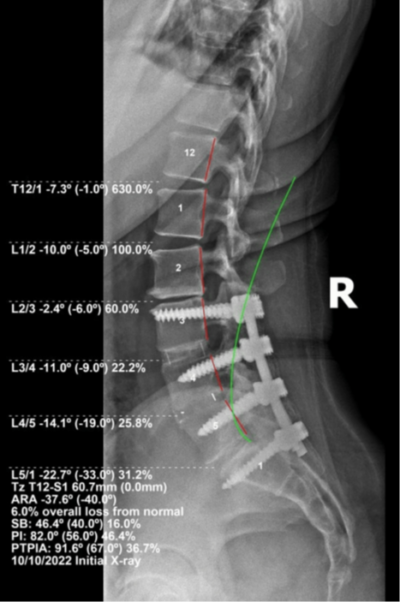
FIGURE 2: Initial lateral lumbar radiograph with PostureRay Biomechanical assessment.
What is Chiropractic BioPhysics® (CBP)?
Chiropractic BioPhysics® is a comprehensive system of structural spinal rehabilitation. Unlike traditional methods that may focus on pain relief or localized mobility, CBP aims to correct the entire geometry of the spine. By restoring the spine to its ideal shape, CBP reduces mechanical stress on the nervous system and prevents further degeneration.
Crucially, CBP can be effective even in patients with existing surgical hardware. By using Mirror Image® exercises, specialized traction, and postural adjustments, practitioners can remodel the spine above and below the fused segments, restoring global balance. This reduces the load on the hardware and the surrounding tissues.
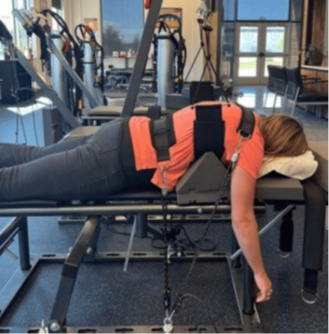
FIGURE 3: Mirror Image® traction. The patient is prone to a force used to increase thoracic curvature and induce posterior thoracic translation.
16° CORRECTION
IN CERVICAL LORDOSIS
Two Surgeries Failed → CBP Succeeded
Two Surgeries Failed → CBP Succeeded
76% Low Back Disability Reduction
76% Low Back Disability Reduction
6-Month Sustained Results
6-Month Sustained Results
From Surgical Failure to Structural Success
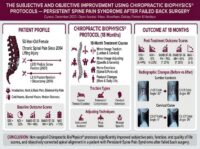
| Measurement | BEFORE Treatment | AFTER 3.5 Months (12 Sessions) | 6-Month Follow-Up |
|---|---|---|---|
| Low Back Disability (ODI) | 50% (Severe) | 12% (Minimal) | 14% ✅ |
| Neck Disability (NDI) | 26% (Severe) | 14% (Mild) | 6% ✅ |
| Headache Disability (HDI) | 46/100 (Moderate) | 18/100 (Mild) | 16/100 ✅ |
| Cervical Lordosis | -14.2° (Hypolordosis) | -30.2° (+16°) | -27.7° ✅ |
| Thoracic Kyphosis | 35.8° (Hypokyphosis) | 43.6° (+7.8°) | 37.7° ✅ |
| Anterior Thoracic Translation | 60.1 mm | 55.5 mm | 52.3 mm ✅ |
| Sagittal Vertical Axis | 60.0 mm | 61.8 mm | 39.5 mm ✅ |
| Low Back Pain | 5/10 | 1/10 | 2/10 ✅ |
| Neck Pain | 3/10 | 1/10 | 1/10 ✅ |
| Hip Pain | Bilateral pain | 100% improved | 70% improved ✅ |
| Muscle Spasms | Frequent | ZERO | ZERO ✅ |
| Quality of Life (SF-36) | Below normal (7/8 subscales) | Dramatically Improved | Above normal (7/8) ✅ |
The 6-Month Sustained Victory
The true test of any rehabilitation program is durability. After her initial 12 sessions, the patient ceased in-office treatment but continued her home exercises diligently. Six months later, the results had not faded—they had solidified. Her disability scores remained low, and on some metrics, she improved even further. Her Sagittal Vertical Axis (SVA), a key measure of global balance, improved from 61.8mm to 39.5mm during the follow-up period.
Her quality of life, measured by the SF-36, was now above population norms on 7 out of 8 subscales. The debilitating muscle spasms that had plagued her for years were gone. She was sleeping well and living with minimal pain. This wasn’t temporary relief masking a problem; it was a true structural correction that provided a lasting solution.
What This Means for Failed Back Surgery Patients
If you have undergone spinal fusion surgery and are still in pain, you are not alone. Failed Back Surgery Syndrome is distressingly common. The medical system often defaults to recommending revision surgery, but the data shows that more surgery often leads to diminishing returns and higher risks.
This case study provides powerful evidence that there is another way. CBP protocols can be successfully applied even in complex cases involving surgical hardware. By correcting the alignment of the whole spine—not just the fused segments—CBP addresses the root mechanical causes of pain. It is a safe, non-invasive, and economical alternative to revision surgery that offers hope where conventional medicine has run out of answers.

Published as part of an educational series on Chiropractic BioPhysics® clinical outcomes | © 2023
Share This Story:
About the Authors & CBP Non-Profit
This study was conducted by researchers including Dr. Deed E. Harrison, President of CBP NonProfit Inc. CBP® (Chiropractic BioPhysics®) is one of the most researched chiropractic techniques in the world, focusing on optimal posture and spinal alignment as the primary goals of care. By combining physics, geometry, and biology, CBP® doctors aim to restore normal spinal mechanics to improve overall health.
About CBP NonProfit
CBP NonProfit is a 501(c)(3) research foundation dedicated to the advancement of spine rehabilitation through high-quality, peer-reviewed chiropractic and physiotherapy research. With over 300 published studies to date, CBP NonProfit is a global leader in evidence-based spinal care innovation.
Recent Posts
CONTACT CBP
CBP Seminars, Inc.
21863 Thorsten Avenue Suite 207
Caldwell, ID 83605
Phone: 208-939-0301
Fax: 208-209-6009
Email: [email protected]
Web: idealspine.com
LATEST ARTICLES
CONTACT CBP
CBP Seminars, Inc.
1160 Taylor Street Suite 100
Meridian, ID 83642
Phone: 208-939-0301
Fax: 208-209-6009
Email: [email protected]
Web: idealspine.com