
Articles
Breakthrough Scientific Reports Study Confirms Lumbar Extension Traction Delivers Clinically Meaningful Relief for Chronic Low Back Pain in the Vast Majority of Patients
Eagle, Idaho — February 3, 2026
Advanced machine-learning analysis of 431 consecutive patients demonstrates that restoring lumbar lordosis drives pain and disability improvement
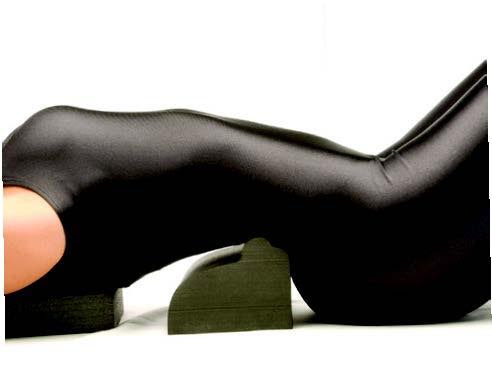
A breakthrough new study (a consecutive case series) published in Scientific Reports—a top-tier, Q1 multidisciplinary journal from Springer Nature—provides compelling evidence that restoring lumbar spinal alignment using lumbar extension traction (LET) results in highly reliable and clinically meaningful improvements for patients suffering from chronic non-specific low back pain.
The study, titled “Machine learning models for predicting treatment outcomes in chronic non-specific back pain patients undergoing lumbar extension traction,” analyzed outcomes from 431 consecutive chronic low back pain patients with radiographically confirmed loss of lumbar lordosis. Using advanced machine-learning models, researchers identified the biomechanical and treatment-specific factors most strongly associated with successful clinical outcomes.
The findings were striking and clinically significant:
- 80% of patients achieved the minimal clinically important change (MCIC) for pain, defined as a ≥2-point improvement on the Numerical Rating Scale (NRS),
- 95% of patients achieved the MCIC for disability, using the Oswestry Disability Index (ODI ≥12% true change),
- Restoration of lumbar lordosis relative to the sacral base angle emerged as a primary driver of outcome success,
- Treatment frequency, duration, and patient compliance significantly influenced improvements in pain and disability and lumbar lordosis,
- Machine-learning models (XGBoost and Random Forest) demonstrated good predictive accuracy, confirming the robustness and reproducibility of the results.
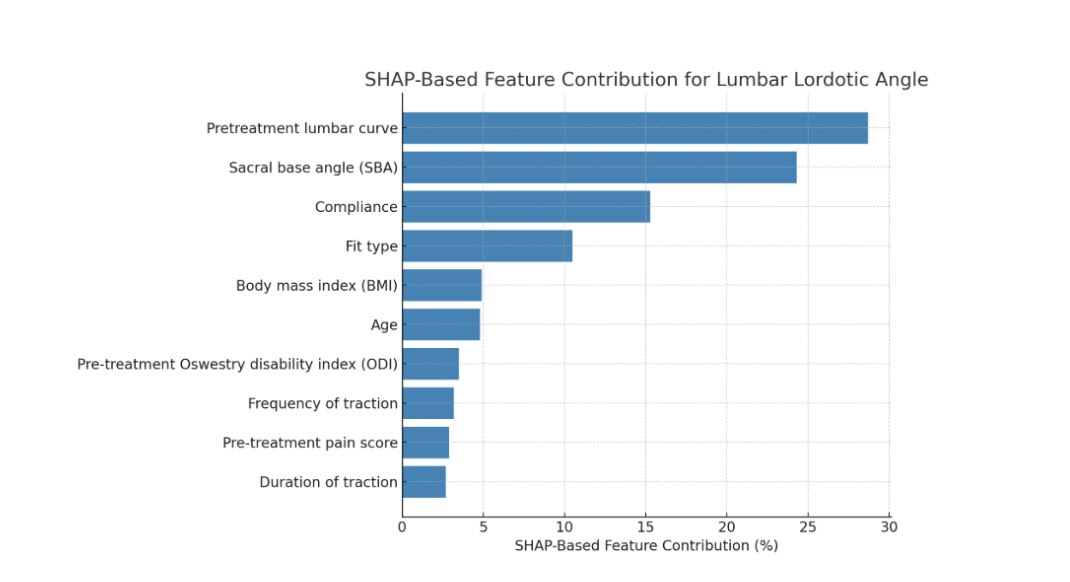
Unlike generalized conservative care approaches that often yield short-term or inconsistent results, this investigation confirms that targeted structural rehabilitation of the hypo-lordotic lumbar spine is not only effective—but predictably effective—when applied with biomechanical precision.
“This study validates what our clinical research has been demonstrating for over two decades,” said Dr. Deed E. Harrison, senior author and corresponding investigator.
“When you restore the lumbar lordosis using a precise, biomechanically sound approach, patients don’t just feel better—they function better, and they do so at remarkably high rates. Seeing 80% of chronic pain patients improve meaningfully in pain and 95% improve in disability is not coincidental. It reflects correction of the underlying structural problem. This is real data, from real patients, published in the scientific literature.” And “I’m so honored to be a part of this amazing team of multi-disciplinary researchers from around the world. Congratulations to my entire team of co-authors: Ibrahim M. Moustafa, Dilber Uzun Ozsahin, Mubarak Taiwo Mustapha, Shima Zadeh, Iman Khowailed, Paul A. Oakley”
Importantly, the study clarifies a long-standing misconception surrounding spinal traction. While many guidelines dismiss traction as ineffective, this research clearly differentiates lumbar extension traction—designed to increase lumbar lordosis—from generic distraction-based traction methods that tend to flatten spinal curves and fail to address sagittal alignment.
The results also reinforce the clinical value of radiographic spinal assessment, demonstrating that alignment parameters such as lumbar lordosis, sacral base angle, and their biomechanical “fit-type” relationship are essential not only for diagnosis, but for treatment selection, personalization, and outcome prediction.
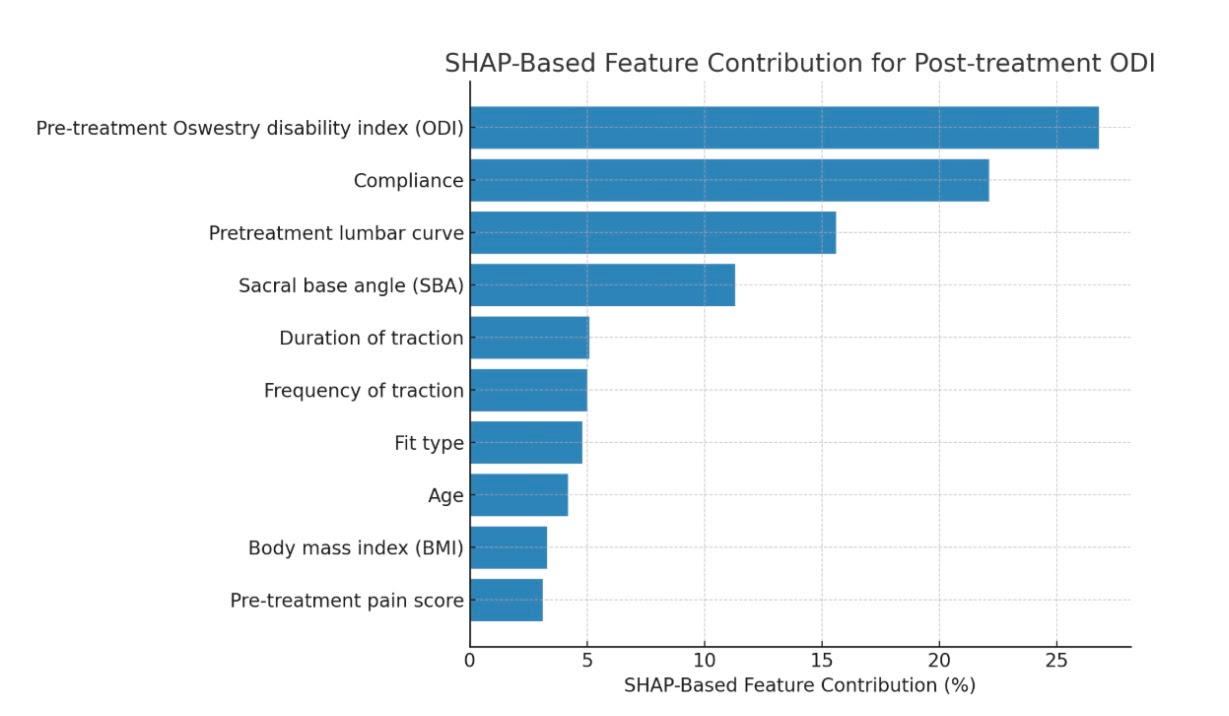
By integrating machine learning with spine biomechanics, this study advances conservative spine care toward a precision-based, data-driven model, enabling clinicians to:
- Identify ideal candidates for lumbar extension traction
- Optimize treatment frequency and duration
- Improve patient education and compliance
- Achieve consistently superior outcomes in chronic low back pain management
This publication represents the research team’s sixth paper in Scientific Reports, further solidifying their leadership in spinal biomechanics, Chiropractic BioPhysics® research, and evidence-based, non-surgical spinal rehabilitation.
Study Reference:
Moustafa IM, Ozsahin DU, Mustapha MT, et al. Machine learning models for predicting treatment outcomes in chronic non-specific back pain patients undergoing lumbar extension traction. Scientific Reports (2026). https://doi.org/10.1038/s41598-026-38059-9
Share This Story:
Recent Posts






CONTACT CBP
CBP Seminars, Inc.
21863 Thorsten Avenue Suite 207
Caldwell, ID 83605
Phone: 208-939-0301
Fax: 208-209-6009
Email: [email protected]
Web: idealspine.com
LATEST ARTICLES
CONTACT CBP
CBP Seminars, Inc.
1160 Taylor Street Suite 100
Meridian, ID 83642
Phone: 208-939-0301
Fax: 208-209-6009
Email: [email protected]
Web: idealspine.com